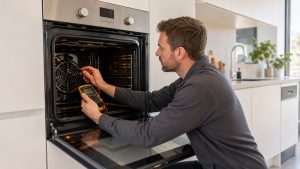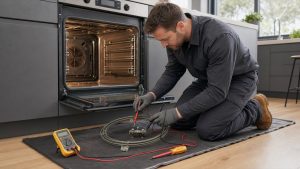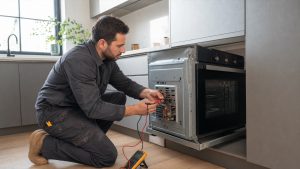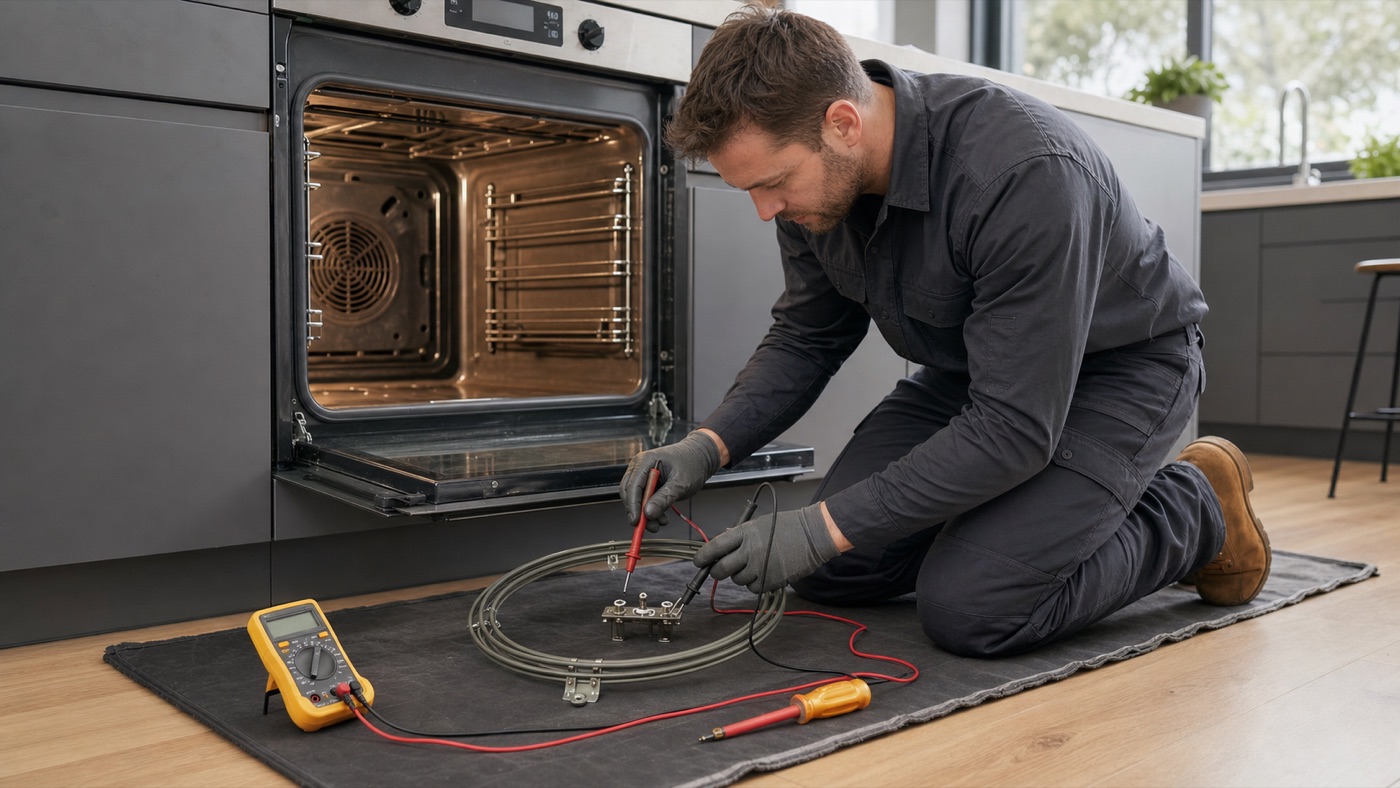
Oven Element, Thermostat or Sensor: What Could Be Faulty?
An electric oven that heats slowly, cooks unevenly or never reaches the selected temperature may have an element, thermostat, temperature sensor or control fault. These parts work together, so the same symptom can have several possible causes. A careful diagnosis is more reliable than replacing a component based only on how the oven behaves.
This guide explains the usual differences between element, thermostat and sensor faults, the warning signs to watch for and when to stop using the oven. It covers electric ovens only. Gas oven work requires an appropriately licensed gas professional.
If your oven has stopped heating altogether, see our electric oven not heating guide. If it trips the safety switch or circuit breaker, stop using it and read why an electric oven may trip the power.
How an electric oven controls heat
Most electric ovens use one or more heating elements, a thermostat or electronic control, and a temperature sensor. The selected cooking mode tells the oven which element to energise. The sensor or thermostat monitors oven temperature, while the controls switch heating on and off to keep the temperature within an expected range.
A fan-forced oven may use a circular element around the fan. Other models can have separate upper, lower and grill elements. Some ovens also use several sensors and electronic boards. Because the design differs between brands and models, accurate testing matters.
Signs that an oven element may be faulty
An element converts electrical energy into heat. It can fail completely, develop an internal break or deteriorate in a way that affects insulation and electrical safety.
Possible element-fault symptoms include:
- The fan operates but the oven remains cold in fan-forced mode.
- One cooking mode heats while another does not.
- Food browns on one side but remains pale on the other.
- The oven takes much longer than usual to preheat.
- A visible element appears blistered, split or damaged.
- The oven trips the circuit breaker or safety switch when a particular mode is selected.
A damaged-looking element should not be touched. Even if it still produces some heat, continued use may worsen the fault. Switch the oven off and arrange an inspection.
Signs that the thermostat or temperature control may be faulty
The thermostat or electronic temperature control tells the oven when to heat and when to stop heating. A fault can cause temperatures to remain too low, rise too high or vary more than normal during cooking.
Possible control-fault symptoms include:
- The oven overheats even though the temperature setting is moderate.
- The oven switches off before reaching the selected temperature.
- Heat continues for an unusually long time without normal cycling.
- Results are consistently undercooked or overcooked across several modes.
- The temperature dial no longer matches the oven’s actual behaviour.
Normal ovens cycle above and below the selected temperature as they regulate heat. That cycling alone does not prove the thermostat is faulty. A technician can compare the oven’s real temperature behaviour with the control signal and the manufacturer’s specifications.
Signs that the oven temperature sensor may be faulty
Many modern ovens use a temperature sensor, sometimes called a probe or thermistor. Its electrical resistance changes as the oven heats, allowing the electronic control to calculate the temperature.
Possible sensor-fault symptoms include:
- The displayed temperature and actual oven temperature differ substantially.
- Temperature rises or falls unpredictably.
- The oven shows a temperature-related error code.
- Preheating ends too early or continues for too long.
- The oven will not start a heating cycle even though the controls respond.
An error code can help narrow the diagnosis, but it does not always identify the failed component by itself. Wiring, connectors and the electronic control can sometimes produce a similar code.
Why the symptoms can overlap
An oven that is not hot enough may have a weak or failed element, an inaccurate sensor, a control fault, damaged wiring, a door-seal problem or an issue with the selected cooking mode. An oven that overheats may have a sensor or control problem, but airflow and door condition can also affect cooking results.
This is why replacing the most obvious part is not always the right answer. A licensed electrician can test the relevant components, inspect accessible wiring and connections, and identify which part of the heating system is not operating correctly.
Safe checks before booking a repair
You can make a few basic checks without opening the appliance:
- Confirm that the clock is set. Some ovens will not heat after a power interruption until the clock is reset.
- Check that a cooking mode and temperature are both selected.
- Compare another cooking mode, but only if the oven has not tripped power, sparked, smoked or produced a burning smell.
- Note any error code exactly as displayed.
- Record the brand, model number and which functions are affected.
Do not remove oven panels, disconnect wiring or test internal components unless you are properly licensed and equipped. Electric ovens can contain mains-voltage connections and stored heat even after a fault appears.
When to stop using the oven
Stop using the oven and switch it off if it:
- Trips the circuit breaker or safety switch.
- Produces sparks, smoke or a burning electrical smell.
- Has a visibly split or glowing element outside normal operation.
- Overheats or will not stop heating.
- Has damaged wiring, controls or a loose electrical connection.
Repeatedly resetting a breaker is not a safe test. A recurring trip means the electrical fault needs investigation.
What happens during professional diagnosis?
The electrician may check the oven’s supply, accessible connections, elements, sensor, thermostat and controls as appropriate for the model and symptoms. Electrical tests can help distinguish a failed component from damaged wiring or a control-board problem.
Once the fault is identified, the electrician can explain the practical repair options and whether the required component is available. Electrica Co’s repair labour is covered for three months. New parts supplied and installed by Electrica Co are covered for 12 months.
For service across Melbourne CBD, northern suburbs and western suburbs, visit our electric oven repairs Melbourne page. You can also view our regional services for Melbourne CBD and the inner city, the northern suburbs and the western suburbs.
Frequently asked questions
Can a licensed electrician replace an electric oven element?
Yes. A licensed electrician can diagnose and replace an electric oven element when the correct component is available and the rest of the appliance is suitable for repair. Testing first helps confirm that the element, rather than the sensor, controls or wiring, is responsible.
How can I tell if the thermostat is faulty?
Consistent overheating, underheating or unusual cycling can point to a thermostat or control issue, but these symptoms can overlap with sensor, element, airflow and wiring faults. Temperature testing and electrical checks are needed for a reliable diagnosis.
Can a temperature sensor stop an oven from heating?
Yes. If the sensor sends an implausible reading, some electronic controls may limit or prevent heating. A damaged connection or control board can sometimes create a similar symptom, so the complete circuit should be checked.
Why does my oven heat in grill mode but not fan-forced mode?
Different cooking modes can use different elements. If the grill works but fan-forced mode remains cold, the fan element or its associated wiring and controls may need testing.
Should I keep using an oven that heats unevenly?
If the change is new or severe, arrange an inspection. Stop using the oven immediately if it trips power, overheats, sparks, smokes or smells burnt.
Request an electric oven repair
Tell Electrica Co the oven brand, model, affected cooking modes, any error code and your Melbourne suburb. Our team can confirm service availability and arrange a suitable appointment for diagnosis by a licensed electrician.