Why Does My Electric Oven Smell When I Turn It On?
A smell from an electric oven can be harmless, but it can also be an early warning of an electrical fault. The important clues are what the smell resembles, when it appears and whether it is accompanied by smoke, sparking, unusual noises or a tripped safety switch.
If your oven smells like hot plastic, burning insulation or an electrical component, turn it off and stop using it. If there is smoke, fire or an immediate danger, move everyone to safety and call Triple Zero (000). Electrical testing and repairs should be completed by a licensed electrician.
Identify the Type of Oven Smell First
An oven can produce an unusual odour for several reasons. Spilt food and grease may burn when the cavity heats up. A new oven can release a temporary manufacturing odour during its first uses. However, damaged wiring, a failing heating element, an overheated connection or a deteriorating control component can also create a sharp or acrid smell.
The smell alone cannot identify the failed part. Several faults create similar symptoms, and the affected components are often behind panels or connected to a high-current circuit. A licensed electrician can isolate the appliance and test it safely.
For a broader list of food, grease, cleaning and electrical causes, see 8 reasons an electric oven smells strange.
When an oven smell may be temporary
A new electric oven
A recently installed oven may produce a temporary smell as protective coatings and manufacturing residue heat for the first time. Follow the manufacturer’s first-use instructions, remove packaging materials and ventilate the kitchen. The smell should reduce as the recommended initial heating cycle is completed.
Stop using the oven if the odour is strongly electrical, persists beyond the manufacturer’s guidance or appears with smoke, arcing, flickering controls or repeated circuit trips.
Food, grease or cleaning residue
Grease splashes, crumbs and food residue can burn on the oven floor, racks or heating surfaces. Some cleaning products can also create a strong odour if residue remains. Wait until the oven is fully cool, follow the cleaning instructions in the appliance manual and inspect only the accessible surfaces.
Do not remove covers, touch wiring or attempt to clean around electrical terminals. If the smell returns after accessible residue has been removed, the cause may be inside the appliance.
Warning smells that should not be ignored
Hot plastic or burning insulation
A hot-plastic or acrid electrical smell can indicate an overheated connector, damaged wire insulation, a loose terminal or a failing control component. Turn the oven off. Do not continue running it to see whether the smell disappears.
Metallic smell with sparking or buzzing
Sparking, crackling or buzzing may point to arcing, a damaged element or a poor electrical connection. These symptoms require prompt professional assessment. If it is safe to do so, switch the oven off at its normal control. If smoke or fire is present, leave the area and call Triple Zero (000).
Burning smell followed by a power trip
If the smell is followed by a tripped circuit breaker or safety switch, leave the oven off. Repeatedly resetting the circuit does not remove the fault. Our guide to an electric oven tripping the circuit breaker explains why insulation failure, elements and wiring need proper testing.
Common electrical causes inside an oven
- Heating element damage: an element can crack, deform or develop insulation failure as it ages.
- Loose or overheated connections: terminals can deteriorate under repeated heating and cooling cycles.
- Damaged internal wiring: heat, movement or wear can affect insulation and connections behind the oven cavity.
- Faulty selector or control component: switches, relays and electronic controls can overheat or fail.
- Cooling fan problems: reduced airflow can allow control areas to become hotter than intended.
- Foreign material near a hot component: packaging, residue or an object may contact a heated surface.
These causes can overlap. For example, a damaged element may smell, heat unevenly and eventually trip the circuit. Our element, thermostat and sensor guide explains how common component symptoms differ.
What to do when your electric oven smells unusual
- Turn the oven off. Use the normal controls if they are safe to reach.
- Keep the door closed if there are flames inside. Leave the property and call Triple Zero (000) if there is a fire or immediate danger.
- Do not touch damaged components. Metalwork and internal parts may remain hot or electrically unsafe.
- Do not repeatedly test the oven. Running it again may worsen an overheated connection or insulation fault.
- Arrange professional diagnosis. Tell the electrician what the smell resembled, when it began and whether the oven also tripped, sparked or stopped heating.
How a licensed electrician diagnoses the problem
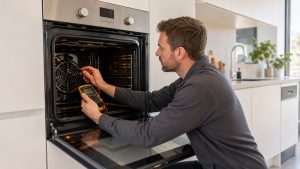
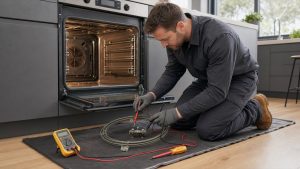
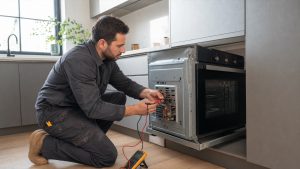
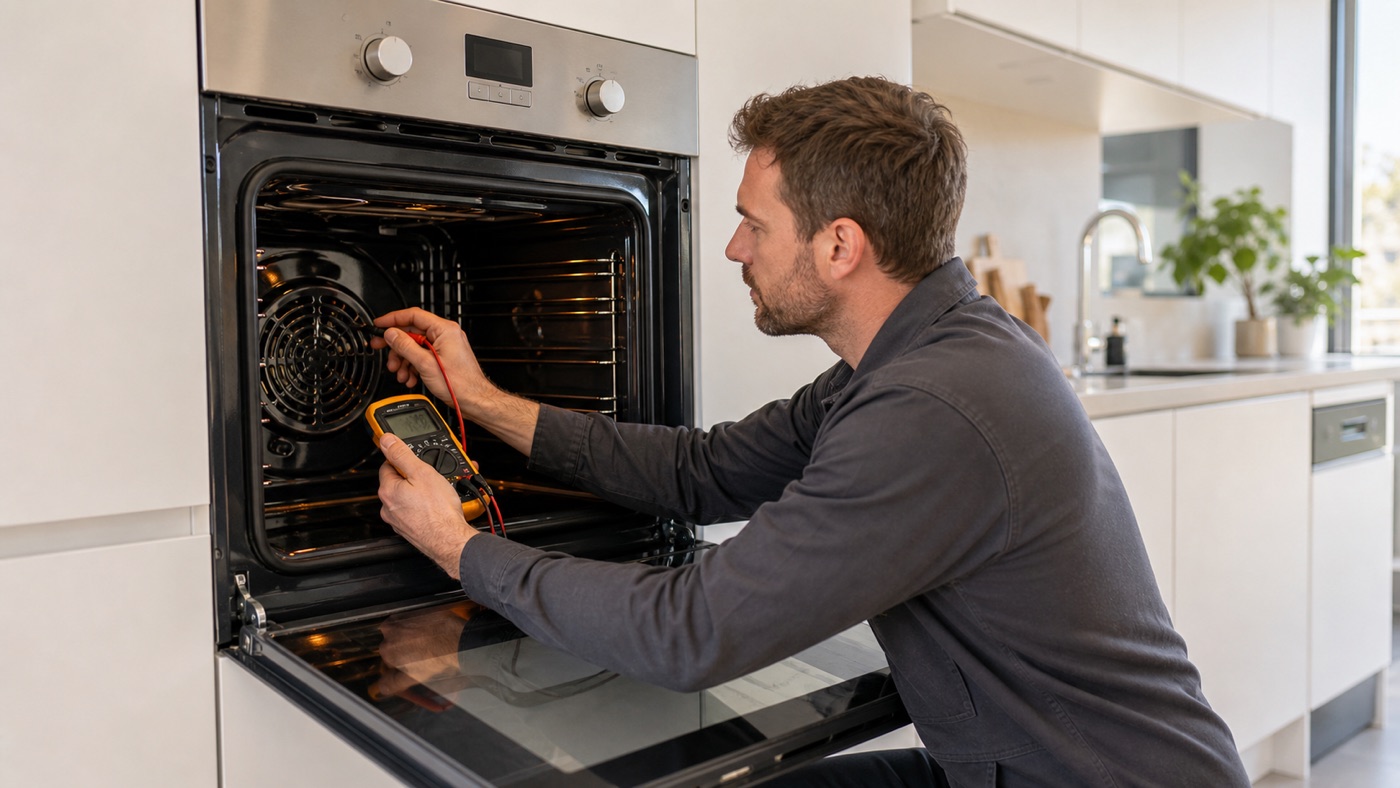
A proper assessment starts by isolating the oven and checking the installation and appliance for visible heat damage. Depending on the symptoms, the electrician may test the heating elements, insulation resistance, thermostatic controls, sensors, terminals, wiring and supply connection.
This testing distinguishes residue burning on an accessible surface from an internal electrical defect. It also helps identify whether another symptom—such as an electric oven that is not heating—has the same underlying cause.
Can you use an oven that has a burning smell?
Do not use the oven when the smell resembles burning plastic, insulation or an electrical component, or when it occurs with smoke, sparking, buzzing, abnormal heat or circuit tripping. Those signs require investigation before the appliance is used again.
If the oven is new, follow the manufacturer’s first-use instructions. If the smell is clearly caused by food residue, allow the appliance to cool and clean only the accessible areas as directed by the manual. When the cause is uncertain, leaving the oven off is the safer decision.
Electric oven smell repairs across Melbourne
Electrica Co provides electric oven repairs in Melbourne for heating-element faults, damaged wiring, overheating connections, controls, sensors and circuit-tripping problems. Our licensed electricians travel to customers across Melbourne CBD, the northern and western suburbs, including Coburg, Northcote and nearby inner-city areas.
Explore our local oven-repair pages for Melbourne CBD, the northern suburbs and the western suburbs.
New parts supplied and installed by Electrica Co. are covered by a 12-month warranty.
Frequently asked questions
Why does my oven smell like burning plastic?
The smell may come from packaging or residue in a new oven, but it can also indicate overheating wiring, insulation, terminals or a control component. Turn the oven off if the smell is electrical, persistent or accompanied by smoke, sparking or abnormal heat.
Why does my oven smell only while preheating?
Preheating places the elements and connections under load, so residue or an electrical fault may become noticeable at that stage. If accessible food residue is not the cause, arrange professional testing before using the oven again.
Should I reset the breaker if the oven smells and trips the power?
Do not repeatedly reset the breaker to keep using the oven. A trip accompanied by an unusual smell may indicate an element, wiring or insulation fault that requires diagnosis.
Can an electrician repair a burning smell from an electric oven?
Yes. A licensed electrician can isolate and test the oven, locate damaged electrical components and complete suitable repairs. The exact cause must be confirmed through inspection and testing.
Arrange an electric oven inspection
If your oven develops a persistent burning or electrical smell, leave it off and arrange an assessment. Contact Electrica Co on 1300 313 006 or request an oven repair.