Oven Not Turning On: Electrical & Power Issues
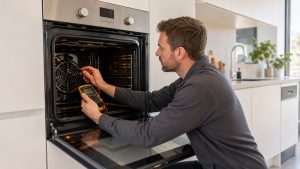
If your electric oven is not turning on, start with safe checks such as the wall isolator, circuit breaker, clock and controls. A completely dead oven, repeated tripping, burning smell or damaged wiring needs a licensed electrician. Electrica Co. provides mobile electric oven repairs across Melbourne, including the CBD, inner city, northern and western suburbs.
Table of Contents
ToggleKey Takeaways
- Loss of power, a reset clock, control faults and failed components can stop an electric oven from starting
- Only perform safe external checks; never remove oven panels or touch internal wiring
- Stop using the oven if it repeatedly trips a breaker, smells burnt or shows heat damage
- Internal electrical faults should be tested by a licensed electrician
- Electrica Co. travels to customers across our Melbourne service area
Why an Electric Oven May Not Turn On
An electric oven that does not power on may have a simple clock or control setting issue, but it can also indicate a tripped circuit, failed component, damaged connection or wiring fault. Ageing connections and heat-affected parts can interrupt the oven’s power supply without warning. Correct diagnosis matters because resetting a breaker does not repair the underlying fault if it trips again.
Common factors include:
- Breakers tripping due to high load or faulty circuits
- Heat damage affecting internal wiring or connectors
- Loose terminals restricting stable power supply
- Worn elements that stop the oven from activating
- Switchboard issues affecting the oven’s dedicated circuit
However, knowing the likely causes can help you understand the situation and decide the best next steps. Here’s what to look for when your oven refuses to switch on.
Start with Basic Power Checks
It might sound obvious, but ovens can stop working due to simple power interruptions. Before moving to detailed troubleshooting, start with the simple checks first.
Check the following:
- Is the oven properly plugged in?
Freestanding units may shift slightly over time, causing the plug to loosen.
- Is the power outlet working?
Only test an accessible general power outlet. Do not pull out a built-in oven, open panels or access concealed wiring.
- Has the plug or cord been damaged?
Visual signs of wear, fraying, or burn marks indicate a serious issue requiring professional repair.
Many homeowners overlook these simple checks, especially with built-in ovens where the outlet is hidden behind cabinetry.
Inspect the Circuit Breaker or Fuse Box
Electric ovens draw a high amount of power, so they are normally assigned to their own circuit. If the circuit trips, the oven will lose power completely.
Common signs of a tripped circuit include:
- The oven is completely unresponsive.
- There’s no display, no lights, and no sound.
- A breaker switch has flipped to the off position.
Resetting the breaker may restore power, but if it trips again soon after, there could be a more serious electrical fault. Overloading other appliances on the same circuit, faulty oven wiring, or short circuits can all cause repeated tripping. In these situations, stop using the oven and call a licensed electrician.
Check the Clock and Controls
Modern ovens often have safety features that prevent operation if the electronic clock or timer hasn’t been set properly. After a power outage, the display may reset to zero, which can stop the oven from turning on until the time is re-entered.
You may need to:
- Reset the digital clock
- Cancel any delayed-start settings
- Clear out child lock or safety modes
If the buttons or display screen are unresponsive, the control board may be faulty, which generally requires professional repair.
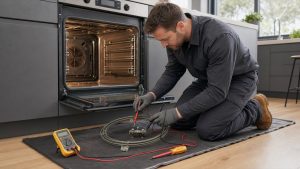
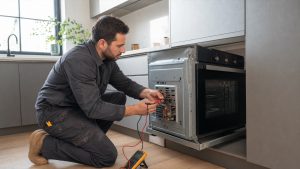
Issues with the Oven’s Internal Wiring
Inside the oven, several electrical components work together to power the heating elements, fan, lights, and controls. Any break in the wiring can stop the oven from switching on entirely.
Possible internal wiring problems:
- Loose or burnt wires
- Faulty connectors
- Damage caused by heat or moisture
- A blown thermal fuse
Ovens contain high-voltage parts that are dangerous to work on without training. If you suspect internal wiring issues, it’s best to contact a licensed electrician experienced in electric oven repairs.
A Failed Heating Element or Component
Sometimes the oven appears to have power, the display lights up, the fan runs, but it still won’t heat. In these cases, the problem may lie with a specific component.
Common component failures include:
- Bake or grill element burn-out
- Faulty fan-forced element
- Burnt terminals
- Failed temperature sensor or thermostat
If the oven lights up but never warms, the heating element may have burnt out. You might notice visible blistering or breaks on the element’s surface. Sensor issues can also cause the oven to shut off immediately or fail to reach the selected temperature.
Thermal Fuse or Safety Cut-Out Issues
Most modern ovens include a thermal fuse or safety switch. If the oven overheats, the fuse cuts power to prevent a fire. Once blown, the oven won’t turn on again until the fuse is replaced.
Signs that the thermal fuse has blown:
- The oven is completely dead despite having power
- No response even after resetting the circuit breaker
- The problem occurred after a very hot cooking session or self-clean cycle
Replacing a thermal fuse requires accessing internal wiring and should only be done by a trained professional.
Control Board, Selector Switch or Timer Faults
In an electric oven, the selector switch, electronic timer and control board tell the elements and fan when to operate. A fault in any of these components can leave the display working while the selected cooking mode does nothing.
Common symptoms include:
- The display or clock works, but the oven will not start
- One cooking mode works while another does not
- The controls are unresponsive or the oven shuts off unexpectedly
These faults require electrical testing and should be diagnosed by a licensed electrician before parts are replaced.
When to Call a Licensed Melbourne Electrician
Some power-related issues have simple external checks, but internal wiring, damaged components and safety devices must be handled correctly. In Victoria, electrical repairs beyond basic user checks should be completed by a licensed electrician.
Call a licensed electrician if:
- The circuit breaker keeps tripping
- There are signs of burning or an electrical smell
- The wiring, internal components, or plug appear damaged
- You suspect the control board, elements, or thermal fuse is faulty
- You’re not fully confident performing further checks
A licensed electrician experienced in electric ovens can diagnose the fault and confirm the appliance is safe to use.
If your electric oven still will not turn on after the basic checks, Electrica Co. provides electric oven repairs across Melbourne. We are a mobile service and travel to customers in the Melbourne CBD and inner city, including Northcote, the northern suburbs, including Coburg, and the western suburbs.
Conclusion
An electric oven that fails to turn on may have a tripped circuit, wiring damage, a failed safety device or a control fault. If the oven remains dead, repeatedly trips, smells burnt or shows signs of heat damage, stop using it and request an electric oven repair. New parts installed by Electrica Co. are covered by a 12-month warranty.
FAQs:
This can occur due to a tripped breaker, faulty wiring, damaged components, or internal electrical faults.
Check the power supply, outlet, and switchboard to ensure the oven is receiving power.
Yes. Many ovens include a thermal fuse that cuts power during overheating.
No. Electrical repairs should only be handled by qualified electricians due to safety risks.
The circuit may be overloaded, or the oven may have an internal fault drawing excess power.
Yes. Loose, burnt, or damaged wiring can interrupt the power supply to the oven.