Do You Need More Power Points?
Most Australian homes were wired long before the modern household’s power demands existed. The result is a growing mismatch between the number of power points available and the number of devices that need them. Electrica Co. helps Melbourne homeowners and businesses address this mismatch safely and properly, without the shortcuts that create genuine electrical hazards down the track.
Table of Contents
ToggleKey Takeaways
- Overloading power boards with multiple adaptors is one of the most common causes of electrical fires in Australian homes.
- Adding power points is not a DIY job, all new electrical work in Australia must be carried out by a licensed electrician.
- Modern power point installations can include USB charging ports, safety switches, and weather-resistant outdoor options.
- A professional assessment identifies not just where you need more outlets, but whether your switchboard can safely support the additional load.
The Reality of Modern Power Demand in Australian Homes
Think about how many devices you charge, plug in, and power on any given day. Smartphones, tablets, laptops, smart TVs, streaming devices, kitchen appliances, home office equipment, gaming consoles, and smart home devices all require power. Now think about how many power points your home actually has in each room.
For most homes built before the 2000s, the answer reveals an obvious gap. Older electrical installations in Melbourne and across Victoria were typically designed to a standard that bears little resemblance to the way households operate today. Two power points per bedroom, four in the kitchen, and a handful in the living area was once considered adequate. It rarely is anymore.
Electrical faults, including those caused by overloaded circuits and improvised power solutions, remain a consistent contributing factor in residential fires across Victoria each year.
Signs You Do Not Have Enough Power Points
Some signs are obvious. Others develop gradually and become normalised until something goes wrong. Here are the indicators that your home genuinely needs additional power points installed:
- You use double adaptors or power boards in most rooms as a permanent arrangement, not a temporary solution
- Power boards are daisy-chained, plugged into other power boards, which is a significant electrical hazard
- You regularly move appliances between rooms because there are not enough outlets where you actually need them
- You have a home office but power points are located on the wrong walls or too far from your desk setup
- Extension cords run across floors or under rugs as a permanent feature of your home
- You have renovated or repurposed rooms without updating the electrical fit-out to suit the new use
- Outdoor entertaining areas, garages, or workshops have no power points at all, or too few for the equipment you use there
Any one of these situations is a reasonable prompt to speak with a licensed electrician about what additional power infrastructure would genuinely improve your home’s electrical setup.
Why Power Boards and Adaptors Are Not a Long-Term Solution
Power boards are convenient, and used correctly they are safe. The problem is that most people do not use them correctly over the long term. A power board used as a permanent substitute for additional power points creates compounding risks:
- Overloading a single circuit with multiple high-draw appliances exceeds what the circuit was designed to handle
- Daisy-chaining power boards multiplies this risk significantly and is specifically warned against by electrical safety authorities
- Cheap or uncertified power boards may not have adequate surge protection or thermal cutoffs
- Extension cords run under rugs or through doorways are a trip hazard and can cause insulation damage through repeated compression
Power board overloading as a leading preventable cause of household electrical fires, reinforcing why proper power point installation is a safety investment, not just a convenience upgrade.
What Is Actually Involved in Adding Power Points?
Adding a power point involves more than drilling a hole in the wall and connecting a few wires. A professional installation looks at the whole picture:
- Circuit Capacity Assessment: your licensed electrician will check whether your existing circuits have sufficient spare capacity to safely support additional outlets. Adding too many loads to an already stretched circuit creates overload risk.
- Switchboard Review: older switchboards with ceramic fuses may need upgrading before additional circuits can be safely added. A switchboard that cannot trip under overload conditions is a fire risk.
- Cable Routing: new power points require cabling to be run from the circuit, which involves careful planning around wall cavities, existing wiring, and structural elements.
- Compliance with Australian Standards: all electrical work in Australia must comply with AS/NZS 3000 Wiring Rules and relevant state regulations. Licensed electricians hold the qualifications and insurance to meet these standards.
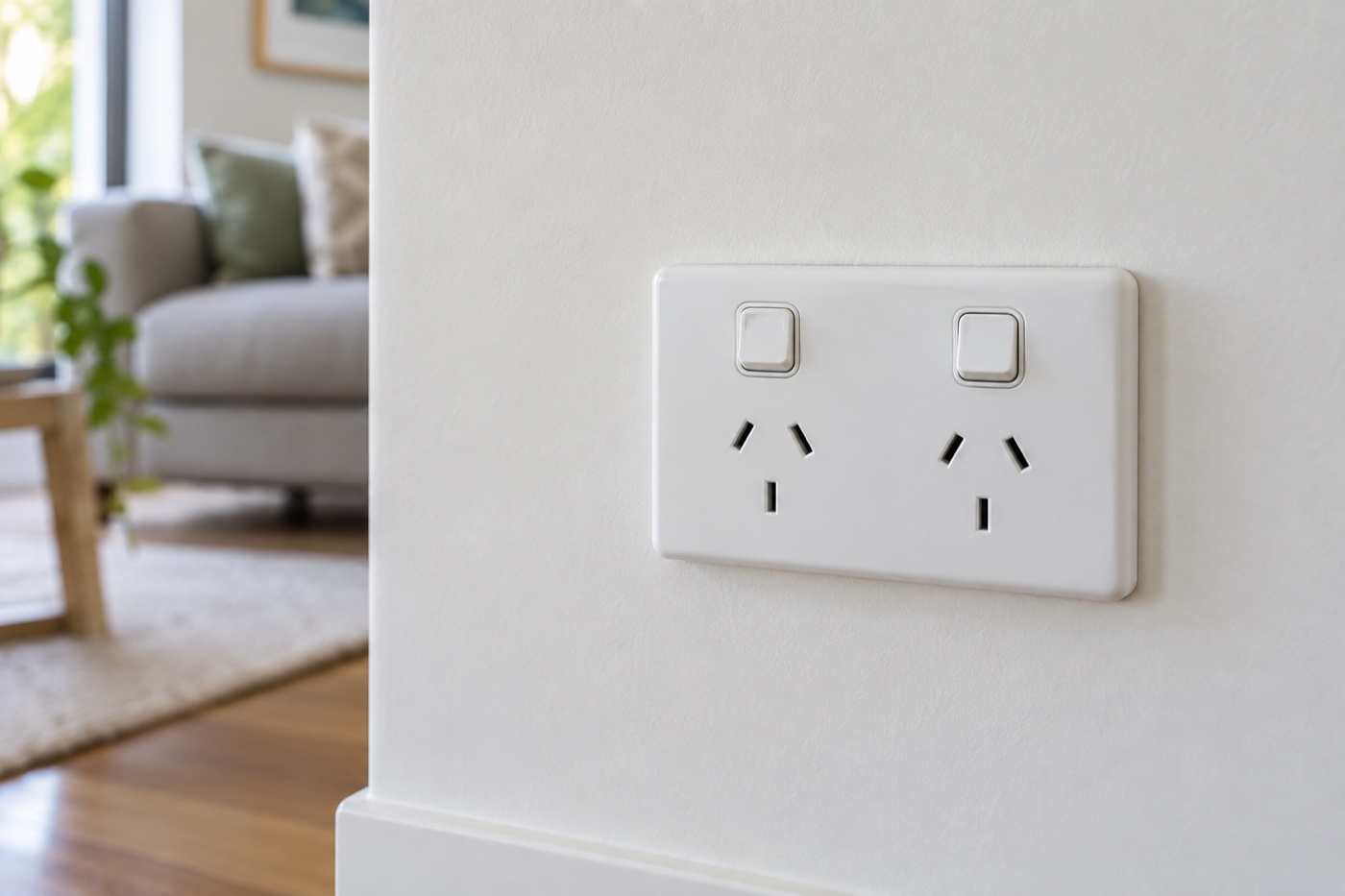
Power points installation service at Electrica Co. covers all residential and commercial power point work across Melbourne, including standard double power points, USB charging outlets, outdoor weatherproof points, and floor-mounted power access options for home offices and living areas.
Modern Power Point Options Worth Knowing About
Power point technology has moved well beyond the standard white double outlet. When you are having additional points installed, it is worth considering what options suit your specific needs:
- USB Power Points: Integrate USB-A and USB-C charging ports alongside standard outlets, eliminating the need for plug-in charger blocks for most devices
- Safety Switch (RCD) Protected Points: Residual current devices provide protection against electric shock by cutting power instantly if a fault is detected. These are required in certain locations and highly recommended throughout the home
- Weatherproof Outdoor Points: IP-rated power points for outdoor entertaining areas, garden power, and workshop applications, designed to prevent moisture ingress
- Recessed Floor Power Points: Flush-mounted floor outlets ideal for home offices, dining rooms, and open-plan living areas where wall points are impractical
- Hidden or Pop-Up Power Points: Concealed outlets in kitchen benchtops and entertainment units that maintain a clean aesthetic while providing accessible power
Integrated power point design, including USB provision and safety switch protection, produces measurably safer electrical environments in modern residential settings.
The Importance of Switchboard Capacity
Before any additional power points are installed, the capacity of your switchboard needs to be assessed. Many Melbourne homes built before the 1990s still have older switchboards that were not designed to manage modern electrical loads.
An outdated switchboard may use ceramic fuses rather than modern circuit breakers. Ceramic fuses do not trip automatically when overloaded, they require manual replacement, and they may not respond quickly enough to prevent damage or fire. Modern switchboards with circuit breakers and safety switches respond instantly and can be reset after tripping.
If your switchboard is already operating close to capacity, adding power points without first addressing the switchboard is counterproductive. Your electrician will advise you on whether a switchboard upgrade is required as part of the power point installation scope.
Switchboard upgrades are one of the most impactful electrical safety investments available to owners of older Australian properties, particularly those planning to increase their overall electrical load.
Is It Legal to Install Power Points Yourself in Victoria?
The answer is clear: no. In Victoria and across Australia, all electrical work, including installing or moving power points, must be carried out by a licensed electrician. Unlicensed electrical work is not only illegal but may also void your home insurance policy and create liability exposure if a fault occurs.
Any person who carries out electrical installation work without the appropriate licence is committing an offence under Victorian law, regardless of the scale or perceived simplicity of the work involved.
This is not bureaucratic caution. Electrical faults caused by unlicensed work are a documented source of serious injuries and fires. A licensed electrician brings the training, tools, and insurance to do the work safely and in compliance with Australian standards.
The technical context for why AS/NZS 3000 Wiring Rules set the standards they do, and why compliance matters beyond the formal legal requirement.
Home Renovations and Power Points: Plan It Together
If you are planning a renovation, a kitchen update, a home office conversion, a garage fit-out, or an outdoor entertaining area, the electrical layout should be part of the planning conversation from the start, not an afterthought.
Adding power points before walls are tiled or finished is significantly more cost-effective than cutting into completed work later. A conversation with your electrician at the planning stage means the power point layout is designed around how the space will actually be used, rather than wherever happens to be accessible after the fact.
Electrical work carried out at the rough-in stage of a renovation is substantially cheaper and better positioned than remedial work performed after fitout is complete.
Conclusion
More power points are not a luxury, for most Melbourne homes, they are a safety and functionality necessity. Whether you need a single additional outlet or a whole-home power point review, the team at Electrica Co. is ready to help. Contact us today to book an assessment and get your electrical setup working the way your home demands.
FAQs:
The cost varies by location, circuit capacity, and switchboard condition. A licensed electrician will provide a clear quote after assessing your specific situation.
No. All electrical installation work in Australia, including adding power points, must be performed by a licensed electrician to comply with the law.
Modern bedrooms typically require four to six power points to comfortably support lighting, device charging, entertainment, and smart home equipment.
Power boards are a temporary solution only. Permanent reliance on power boards, especially daisy-chained ones, creates fire and overload risks over time.
A straightforward power point installation typically takes one to three hours per outlet, depending on cable routing and switchboard access required.
Yes. Australian standards require safety switch protection on power point circuits. A licensed electrician will ensure all new outlets meet current compliance requirements.
Melbourne power point help
Need New or Replacement Power Points?
Tell us where you need the outlets, what equipment they will supply, your property type and suburb. A licensed electrician can assess the existing circuit, wiring access and switchboard capacity before confirming suitable options.
Power point installation and repairsSwitchboard assessmentsElectrical safety checks